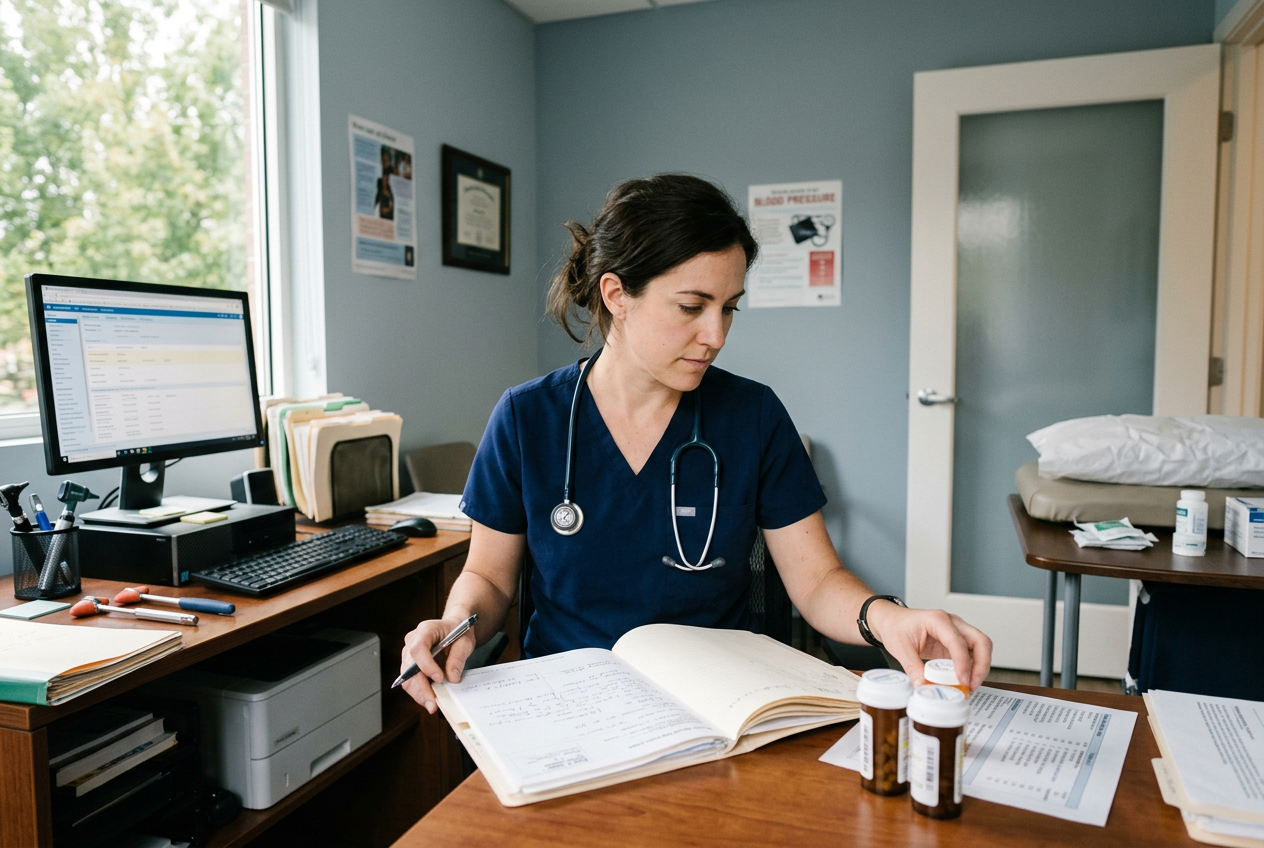


Modern medicine has changed dramatically over the last century.
There was a time when many medical decisions were based primarily on tradition, anecdotal experience, or intuition. While clinical experience remains incredibly important, healthcare today increasingly depends on something stronger: evidence.
This is the foundation of evidence-based medicine (EBM), also known as evidence-based practice (EBP).
At its core, evidence-based medicine means using the best available scientific evidence, alongside clinical expertise and patient preferences, to make decisions about patient care.[1,2]
It is one of the most important developments in modern healthcare because it helps clinicians move away from guesswork and toward safer, more effective, and more consistent patient care.
What Is Evidence-Based Medicine?
Evidence-based medicine was formally described by Sackett and colleagues as:
“The conscientious, explicit and judicious use of current best evidence in making decisions about the care of individual patients.”[1]
In simple terms, EBM means that healthcare professionals should not rely only on habit, routine, or opinion when treating patients. Instead, clinical decisions should be guided by high-quality scientific research and tailored to the individual patient.
Evidence-based medicine combines three major components:
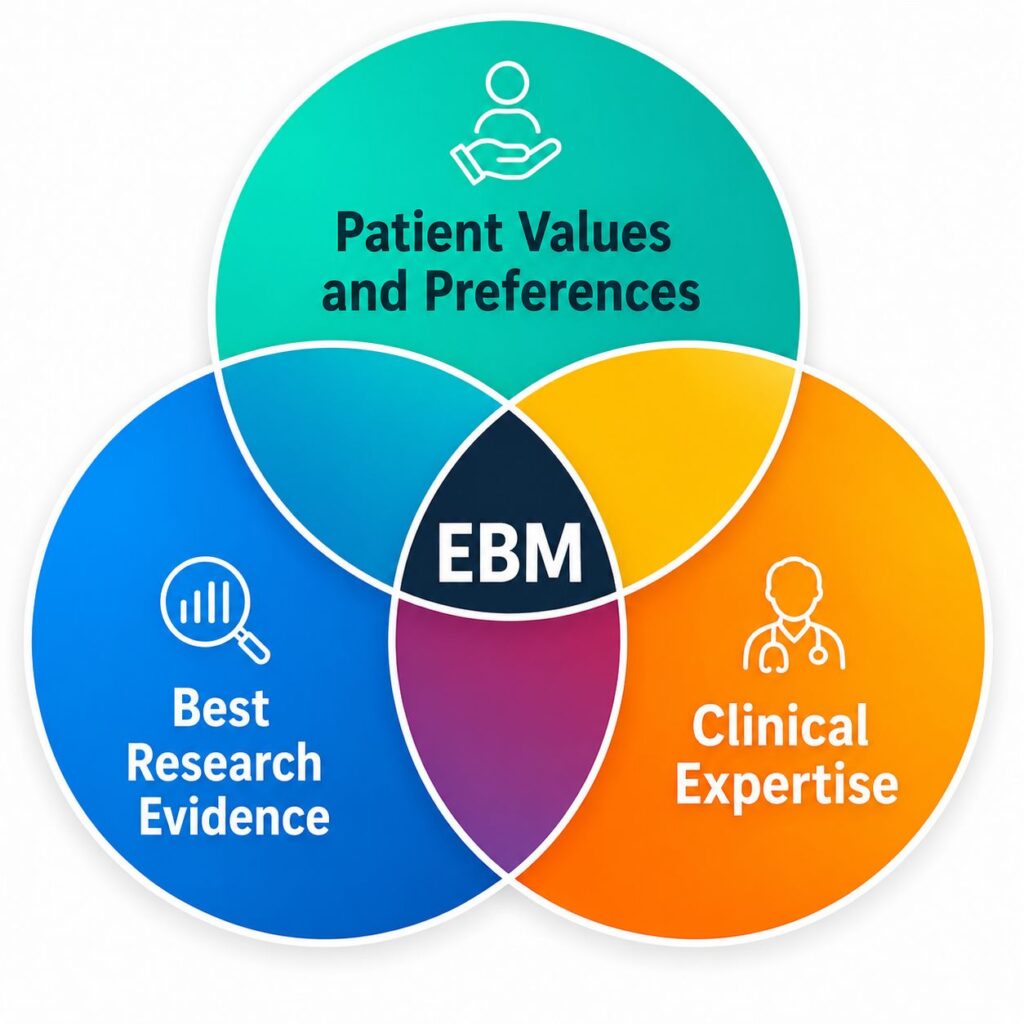
1. Best Available Research Evidence
This includes the highest-quality scientific studies available at the time.
Examples include:
• Systematic reviews
• Meta-analyses
• Randomized controlled trials
• Cohort studies
• Case control studies
These studies help determine:
• Whether a treatment works
• Whether it is safe
• Whether it is better than existing treatments
2. Clinical Expertise
Research alone is not enough.
A clinician’s experience, judgment, and practical knowledge remain essential.
Two patients with the same condition may respond differently to the same treatment. Experienced healthcare professionals understand how to interpret evidence within the context of the patient sitting in front of them.
Clinical expertise helps answer questions like:
• Is this treatment appropriate for this patient?
• Will this patient tolerate the medication?
• Are there risks that the studies may not fully capture?
3. Patient Values and Preferences
Every patient is unique.
Patients may have:
• Different goals
• Cultural beliefs
• Financial limitations
• Personal preferences
• Different tolerance for side effects or risk
Evidence-based medicine recognizes that the “best” treatment is not always the same for every person.
Good medicine involves shared decision-making between the clinician and the patient.[3]

Understanding the Evidence Pyramid
Not all medical evidence carries the same strength or reliability.
Some forms of evidence are more trustworthy because they reduce bias and use stronger scientific methods.
This is often illustrated using the “evidence pyramid.”
Level 5 — Lowest Level of Evidence
At the bottom are:
• Expert opinions
• Case reports
• Small observational studies
These can provide useful insights, especially for rare conditions, but they are more vulnerable to bias and limited conclusions.
Level 4 — Lower-Mid Level Evidence
Higher up are:
• Case control studies
These studies compare patients with a condition to those without it to identify possible risk factors or associations.
They provide stronger evidence than isolated case reports but still have limitations and potential bias.
Level 3 — Moderate Level Evidence
Next are:
• Cohort studies
These studies follow groups of patients over time and observe outcomes.
They are stronger than case control studies because they can better evaluate relationships between exposures and outcomes over time.
Level 2 — High Level Evidence
Near the top are:
• Randomized controlled trials (RCTs)
RCTs are considered one of the strongest forms of clinical research because patients are randomly assigned to different treatments, helping reduce bias.[4]
These studies are often used to determine whether one treatment is truly better than another.
Level 1 — Highest Level of Evidence
At the very top are:
• Systematic reviews
• Meta-analyses
These are often considered the gold standard of evidence.
Instead of examining one study alone, they analyze multiple high-quality studies together to produce broader and more reliable conclusions.[5]
This helps clinicians make decisions based on the totality of evidence rather than isolated findings.

How Evidence-Based Medicine Works in Real Life
Imagine a physician treating a patient with hypertension.
For years, the physician may have used Medication A successfully. Then a newer Medication B becomes available, supported by strong randomized controlled trials showing better cardiovascular outcomes.
Using evidence-based medicine, the clinician would:
• Review the best available evidence
• Assess the quality of the studies
• Compare benefits and risks
The evidence may suggest that Medication B is statistically superior.
However, the clinician’s experience may reveal that this specific patient previously developed side effects with similar medications or tolerates Medication A better.
Then the patient’s preferences also matter:
• Can they afford the medication?
• Are they comfortable with the side effects?
• Do they prefer fewer daily pills?
Ultimately, the final decision combines:
• Scientific evidence
• Clinical judgment
• Patient preference
This is true evidence-based care.
The Five Steps of Evidence-Based Practice
Evidence-based medicine generally follows five core steps:[6]
1. Ask
Formulate a clear clinical question.
Example:
“Is Drug B more effective than Drug A in reducing stroke risk?”
2. Acquire
Search for the best available evidence.
This may involve:
• Medical journals
• Clinical guidelines
• Systematic reviews
• Research databases
This is where modern clinical decision support tools can significantly help clinicians.
3. Appraise
Critically evaluate the evidence.
Questions include:
• Is the study reliable?
• Was there bias?
• Is the sample size large enough?
• Are the findings clinically meaningful?
4. Apply
Combine the evidence with:
• Clinical expertise
• Patient values
• Real-world clinical context
5. Assess
Evaluate the outcomes and continue improving clinical practice.
The Challenge of Information Overload
One of the biggest challenges in modern medicine is the sheer volume of information.
Thousands of medical studies are published every year.[7]
No physician, nurse, or healthcare professional can realistically read, interpret, and critically appraise all new literature continuously.
This creates a major gap between available evidence and real-world clinical practice.
Clinicians often face:
• Time constraints
• Information overload
• Rapidly changing guidelines
• Difficulty synthesizing evidence quickly at the point of care
Bringing Evidence-Based Medicine to the Point of Care
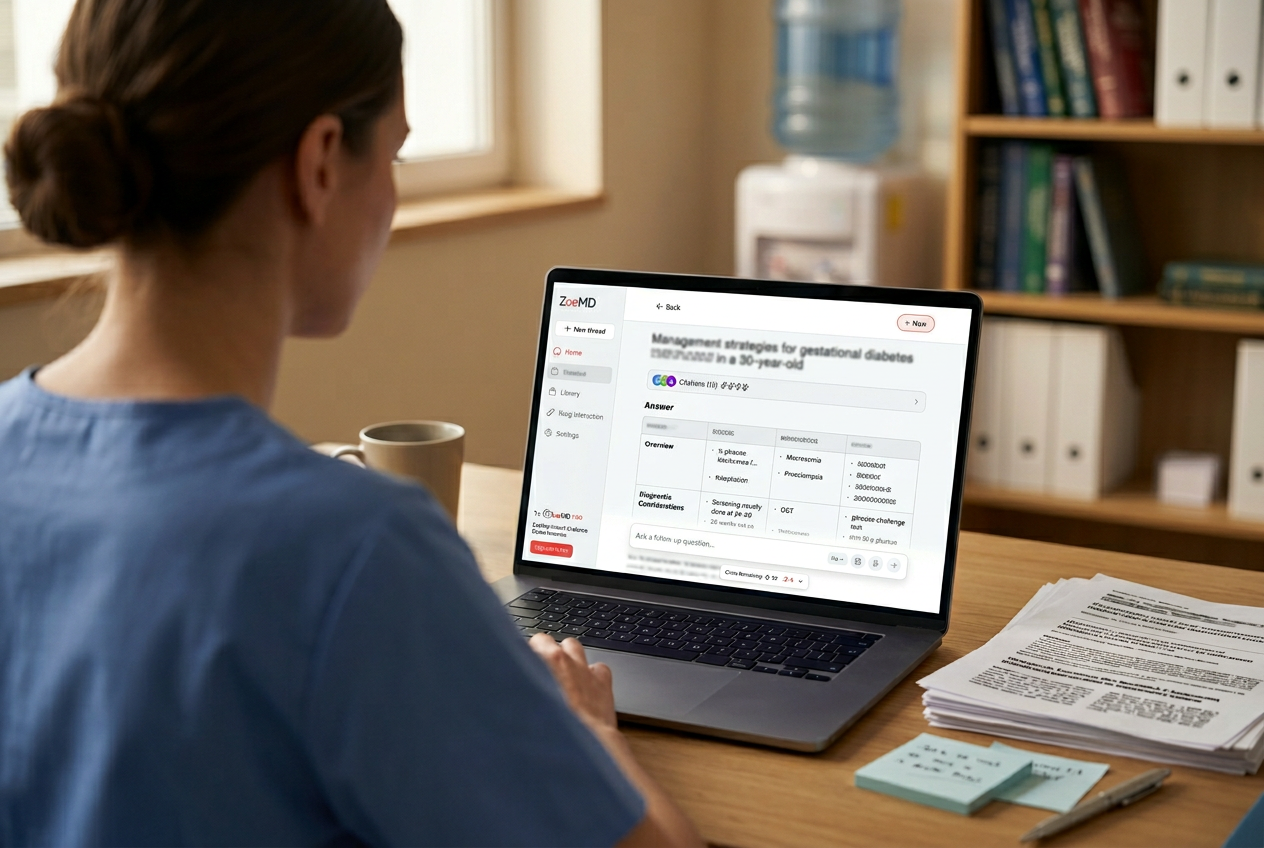
This is where clinical decision support tools such as ZoeMD can help.
Instead of manually searching through multiple journals, databases, and studies, clinicians can quickly query evidence-based information and receive synthesized, clinically relevant answers at the point of care.
The goal is not to replace clinicians.
The goal is to improve access to evidence so healthcare professionals can make faster, safer, and more informed decisions.
When used responsibly, these tools can help:
• Reduce cognitive burden
• Improve efficiency
• Support evidence-based decisions
• Enhance patient safety
• Keep clinicians updated with evolving research

Why Evidence-Based Medicine Matters
Evidence-based medicine improves healthcare because it:
• Promotes safer patient care
• Reduces unnecessary treatments
• Encourages effective interventions
• Improves consistency in clinical practice
• Helps clinicians stay current with evolving research
Most importantly, it helps ensure that medical decisions are guided by the best available knowledge rather than outdated practices or unsupported assumptions.
Final Thoughts
Evidence-based medicine is not about removing the human side of medicine.
It is about strengthening medicine with better evidence.
The best healthcare decisions happen when:
• Scientific evidence
• Clinical expertise
• Patient preferences
all work together.
As medicine continues to evolve, access to reliable evidence at the point of care will become increasingly important.
The future of healthcare is not clinicians versus technology.
It is clinicians empowered by better access to evidence.
References
1. Sackett DL, Rosenberg WM, Gray JA, Haynes RB, Richardson WS. Evidence based medicine: what it is and what it isn’t. BMJ. 1996;312(7023):71–72.
2. Guyatt G, Cairns J, Churchill D, et al. Evidence-based medicine. A new approach to teaching the practice of medicine. JAMA. 1992;268(17):2420–2425.
3. Barry MJ, Edgman-Levitan S. Shared decision making — the pinnacle of patient-centered care. N Engl J Med. 2012;366(9):780–781.
4. Hariton E, Locascio JJ. Randomised controlled trials — the gold standard for effectiveness research. BJOG. 2018;125(13):1716.
5. Murad MH, Asi N, Alsawas M, Alahdab F. New evidence pyramid. Evid Based Med. 2016;21(4):125–127.
6. Straus SE, Glasziou P, Richardson WS, Haynes RB. Evidence-Based Medicine: How to Practice and Teach EBM. 5th ed. Elsevier; 2018.
7. Bastian H, Glasziou P, Chalmers I. Seventy-five trials and eleven systematic reviews a day. PLoS Med. 2010;7(9):e1000326.